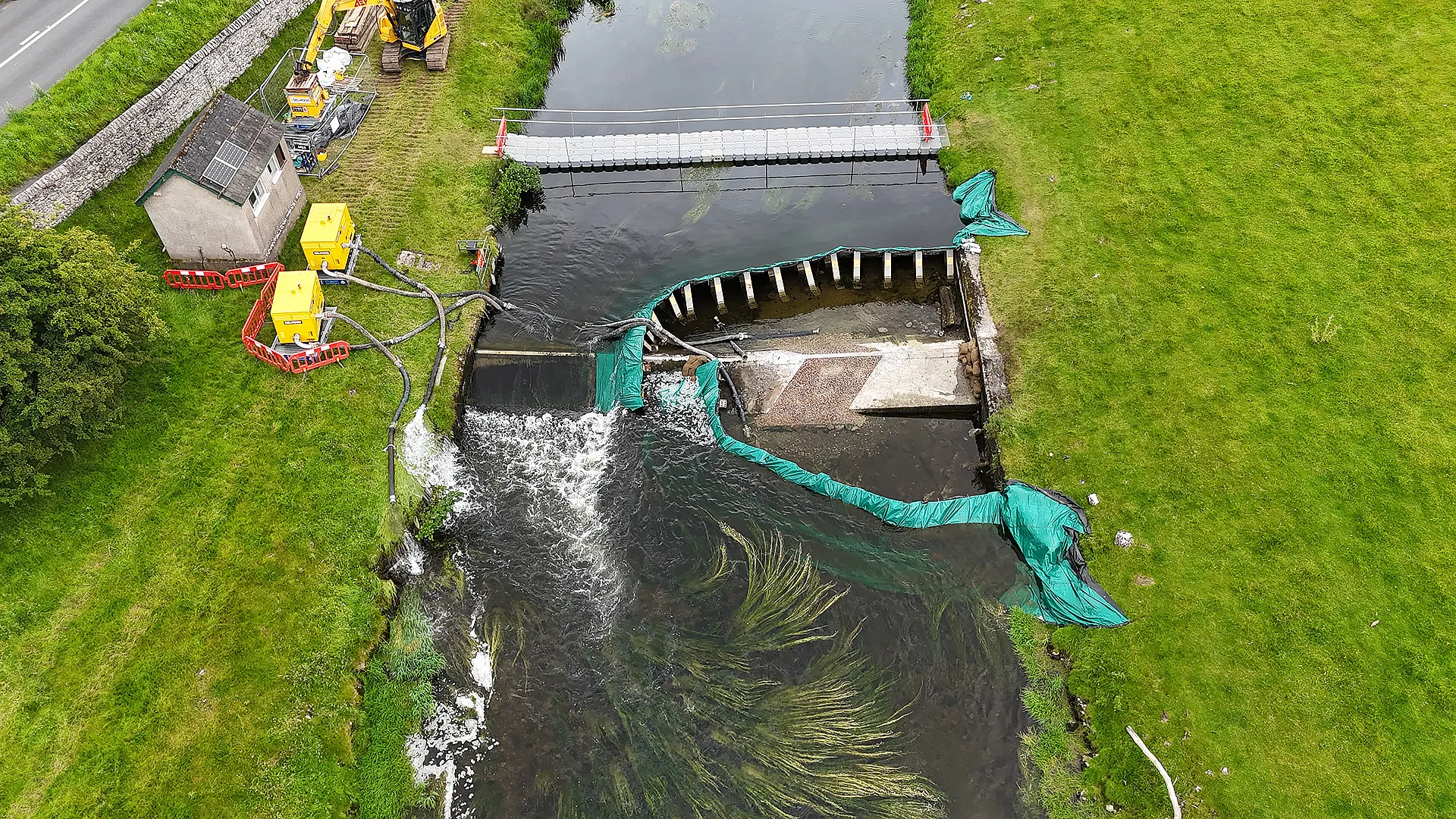
Working in and around water presents a unique engineering challenge. Projects must be delivered safely while protecting water quality, surrounding habitats and the wider environment. Effective temporary water control is fundamental to achieving both.
Whether maintaining water treatment assets, repairing bridges, upgrading flood defences or replacing culverts, isolating the work area from the surrounding water allows construction activities to be carried out in a controlled environment, reducing environmental risk throughout the project.
Controlling sediment at the source
Uncontrolled sediment is one of the most common environmental risks during in-water construction. Excavation, drilling and demolition activities can release fine material into rivers and watercourses, increasing turbidity and affecting aquatic habitats downstream.
By isolating the work area, temporary dams prevent sediment entering the live watercourse, allowing it to be managed, contained and removed safely. This controlled approach helps protect water quality while reducing the risk of environmental incidents.
Protecting sensitive water environments
Many projects take place within environmentally sensitive locations, where maintaining ecological integrity is just as important as completing the engineering works.
Temporary water control creates a physical separation between construction activities and the surrounding environment, helping contain concrete washout, fuels and other contaminants while reducing disturbance to aquatic habitats. The result is a safer working environment for engineers and greater protection for the ecosystems that surround the works.
Minimising intervention
Environmental protection is not only about preventing pollution. It is also about selecting construction methods that minimise the impact of the works themselves.
By isolating only the area required for construction, temporary water control can reduce excavation, limit over-pumping and avoid unnecessary disturbance to surrounding assets. Modular systems can often be installed, adapted and removed quickly, helping reduce both programme duration and the overall construction footprint.
Supporting resilient infrastructure
As infrastructure owners continue to invest in ageing assets, engineering solutions must balance operational requirements with environmental responsibility.
Temporary water control enables inspection, maintenance and construction works to proceed while keeping critical assets operational wherever possible. By reducing shutdowns, limiting environmental impact and providing controlled working conditions, these systems help deliver projects that are both operationally efficient and environmentally responsible.
Engineering with the environment in mind
Environmental protection should not be considered separately from engineering—it should be designed into every project from the outset.
At High Water, temporary water control is developed to do more than create a dry working area. It enables safe construction, protects the surrounding environment and helps clients deliver essential infrastructure projects with confidence that environmental risks have been carefully managed.